Therachat and Addapp [Transcript] [Audio]

KourisKalligas_Therachat &Addapp

Guest:  Kouris Kalligas

Presenter: Neal Howard

Guest Bio: As CEO and co-founder, Kouris Kalligas leads the strategic and operational direction of Therachat. Kouris has a rich history of working on innovative products in health and wellness and helping companies grow and scale. Previously, Kouris co-founded Addapp and spent over six years at Sappi Fine Paper as a supply chain service manager and lead business development manager overseeing innovation projects. He received his B.A. in International Economics & Development from Democritus University of Thrace, completed the ERASMUS program in International Business at the University of Gavle and earned his M.A. in International Relations from the University of Warwick.

Segment overview: Kouris Kalligas, Co-Founder and CEO of both Therachat and Addapp Corp. discusses a smart journaling tool that allows psychologists, therapists and counselors greater insight into their client’s life between sessions.  

Read More

TREMFYA (guselkumab) – New Treatment for Plaque Psoriasis [Transcript] [Audio]

DrAndrewBlauvelt_TREMFYA

Guest: Dr. Andrew Blauvelt

Presenter: Neal Howard

Guest Bio: Andy Blauvelt hails from Portland, OR, and is President and Investigator at Oregon Medical Research Center, a small business dedicated to performing high quality clinical studies in dermatology. A native of Michigan, he received his undergraduate degree in Electrical Engineering at Purdue University, his medical degree at Michigan State University, and his MBA from Portland State University/Oregon Health & Science University (OHSU). Dr. Blauvelt trained in dermatology at the University of Miami from 1989-1992 and in basic immunology and virology at the National Institutes of Health (NIH) from 1992-1996. He has held senior staff positions at the NIH, as Professor of Dermatology and Microbiology at OHSU, and as Chief of Dermatology at the Portland VA Medical Center. Andy’s clinical and research expertise is in immunology, virology, infectious diseases, psoriasis, atopic dermatitis, and biologic therapies for complex medical dermatology patients, having published over 200 papers and spoken across the world on these topics. Dr. Blauvelt was elected into the American Society for Clinical Investigation in 2004, a leading society for physician-scientists, and is an elected member of the International Psoriasis Council, the premier group of psoriasis experts in the world.

Segment overview: Andrew Blauvelt, MD, MBA, President of the Oregon Medical Research Center, discusses the recently FDA approved medication TREMFYA™ (GUSELKUMAB), the first and only biologic that selectively blocks IL-23, a cytokine that is thought to play a key role in plaque psoriasis, for the treatment of adults living with moderate to severe plaque psoriasis who are candidates for systemic therapy or phototherapy.

Read More

Profiling Cancer on a Molecular Level [transcript] [audio]

DavidSpetzler_CarisLifeSciences

Presenter: Neal Howard

Guest Bio: Dr. David Spetzler joined Caris Life Sciences in August of 2009, and has held several management positions with increasing responsibilities during his tenure. He currently serves as President and Chief Scientific Officer and provides executive leadership for the company’s service lines, Caris Molecular Intelligence® and ADAPT Biotargeting System™.

Prior to his position at Caris, Dr. Spetzler was a member of the research faculty at Arizona State University where he developed multiplexed nanotechnologies for single molecule detection of nucleic acid and protein targets. At Arizona State University Dr. Spetzler earned an MS from the School of Mathematical and Statistical Science in Computational Bioscience, a Ph.D. in Molecular Cellular Biology and an MBA. Dr. Spetzler is an adjunct faculty member of the molecular cellular biology program at Arizona State University.

Segment overview: David Spetzler, Chief Scientific Officer at Caris Life Sciences to talks about their involvement with several studies where cancer is being treated based on molecular profile rather than its site of origin.

Read More

The Health News Australia July 19 2017

Overview

  • Australia’s healthcare system has been ranked among the best in the developed world by a team of American researchers who have ranked their own country’s system the worst. In a study involving 11 different national health care models, researchers at the New York-based Commonwealth Fund ranked Australia’s mixed public-private system 2nd best.
  • Medical students want public universities banned from the “money-grabbing” practice of offering Australian students full-fee-paying places for medical degrees, saying it unfairly preferences wealthy candidates. Domestic full-fee-paying places costing upwards of $ 300,000 have no place in public universities, and threaten to exacerbate the national shortage of medical internships, the Australian Medical Students’ Association has warned.
  • An increasing number of babies are being admitted to South Australian hospitals for preventable tooth decay with sugary drinks, non-fluoridated bottled water and poor dental hygiene being blamed.
Read More

Prevent Childhood Poisoning, Dispose Expired and Unwanted Medicine Properly [Interview][Transcript]

Guest: Toni Riley

Presenter: Tabetha Moreto

Guest Bio: Toni Riley is a pharmacist and has for many years practised as a community pharmacist and a consultant pharmacist, providing medication review services to the community and in Aged Care. She has been the national project of the National Return and Disposal of Unwanted Medicine Project (the RUM Project) since 2015 and during this time has commissioned a National Audit and General Population Survey, and most recently a public awareness campaign for the RUM project.

Segment overview: The RUM Project is a Commonwealth funded program, providing all community pharmacies in Australia a method of environmentally safe disposal of unwanted and expired medicines returned to the pharmacy by the consumer. This program has been in operation continuously since 1998 and today incinerate in excess of 700,000kg of unwanted medicines annually. Anyone can return their household medicines to any community pharmacy. The returned medicines are put in a secure bin and then collected and disposed of by high temperature incineration in accordance with regulatory and EPA requirements.

The Health News USA July 19 2017

Overview

  • A new study suggests that the survivors of the terrorist attack on the World Trade Center in New York City on September 11, 2001 and first-responders who were on the scene that day – may have an increased risk for heart and lung diseases. The World Trade Center attack exposed thousands of people to intense concentrations of hazardous materials that have resulted in reports of increased levels of asthma, heart disease, diabetes and other chronic physical and psychological disorders, researchers note in the journal Injury Epidemiology.
  • According to lead researcher Martin Makary, a professor of surgery at Johns Hopkins University School of Medicine, medical errors are rampant in the US. Makary’s data shows the number at two to three times higher than previously thought, a whopping 250,000 a year.
  • Michelle Carter sent her boyfriend, Conrad Roy III text messages encouraging him to take his own life. She has been found guilty of involuntary manslaughter. Their text messages were meant only for each other. But now hundreds of one young couple’s intimate written exchanges have been exposed during the Carter’s trial.
Read More

The Health News United Kingdom July 19 2017

Overview

  • US doctor Dr. Michio Hirano who has offered to treat terminally ill Charlie Gard has attended a meeting at Great Ormond Street Hospital to decide whether he should travel to America for therapy.
  • Professor Sir Michael Marmot of the Institute of Health Equity at University College London has warned improvements in life expectancy have almost “ground to a halt. Sir Michael said he was “deeply concerned” that increases in life expectancy had levelled off since two thousand and ten.He said the stagnation needs “urgent” investigation.
  • A UK-wide inquiry will be held into the contaminated blood scandal that left at least 2,400 people dead, the prime minister has confirmed. Thousands of NHS patients were given blood products from abroad that were infected with hepatitis C and HIV. It’s been called the worst treatment disaster in the history of the NHS.
Read More

The Health News United Kingdom July 17 2017

Overview

  • Further health budget cuts could result in more dirty needles being discarded on Britain’s streets, pharmacists have warned.The King’s Fund think tank calculated that funding for tackling drug misuse, provided by local authorities, is facing a 5.5% percent cut of more than £22 million pounds this year.
  • Dramatic cuts to sexual health services are fuelling a surge in cases of syphilis and gonorrhoea, a think tank has warned. Planned spending in this area has fallen by £64 million (10%) over the past four years.
  • A British court gave the parents of eleven-month-old Charlie Gard a chance to present fresh evidence that their terminally ill son should receive experimental treatment. Charlie suffers from mitochondrial depletion syndrome, a rare genetic disease that has left him brain damaged and unable to breathe unaided.
Read More

The Health News USA July 17 2017

Overview

  • Many Americans are downright lazy. That’s among the findings of a study by Stanford University researchers using step-counters installed in most smartphones to track the walking activity of about 700,000 people in 46 countries around the world
  • Doctor Charalambos Antoniades of Britain’s University of Oxford and colleagues reported that they have developed a new imaging method that detects inflamed fat cells  as they are transforming into the inflamed, hardened plaques that clog up arteries. If the method holds up, doctors could start patients on drugs such as statins far earlier than they do now  in time to save them from ever developing serious heart disease, the researchers report in the journal Science Translational Medicine.
  • Eating fast food has been seen as a key factor in the growing obesity epidemic in the U.S. and throughout the world. Food journalist Mark Bittman says that the ‘fact’ that junk food is cheaper than real food has become a reflexive part of how we explain why so many Americans are overweight, particularly those with lower incomes. Poor people were actually less likely to eat fast food — and do so less frequently — than those in the middle class, and only a little more likely than the rich.
Read More

Safeguarding Patient Confidentiality in Accessing Electronic Health Records

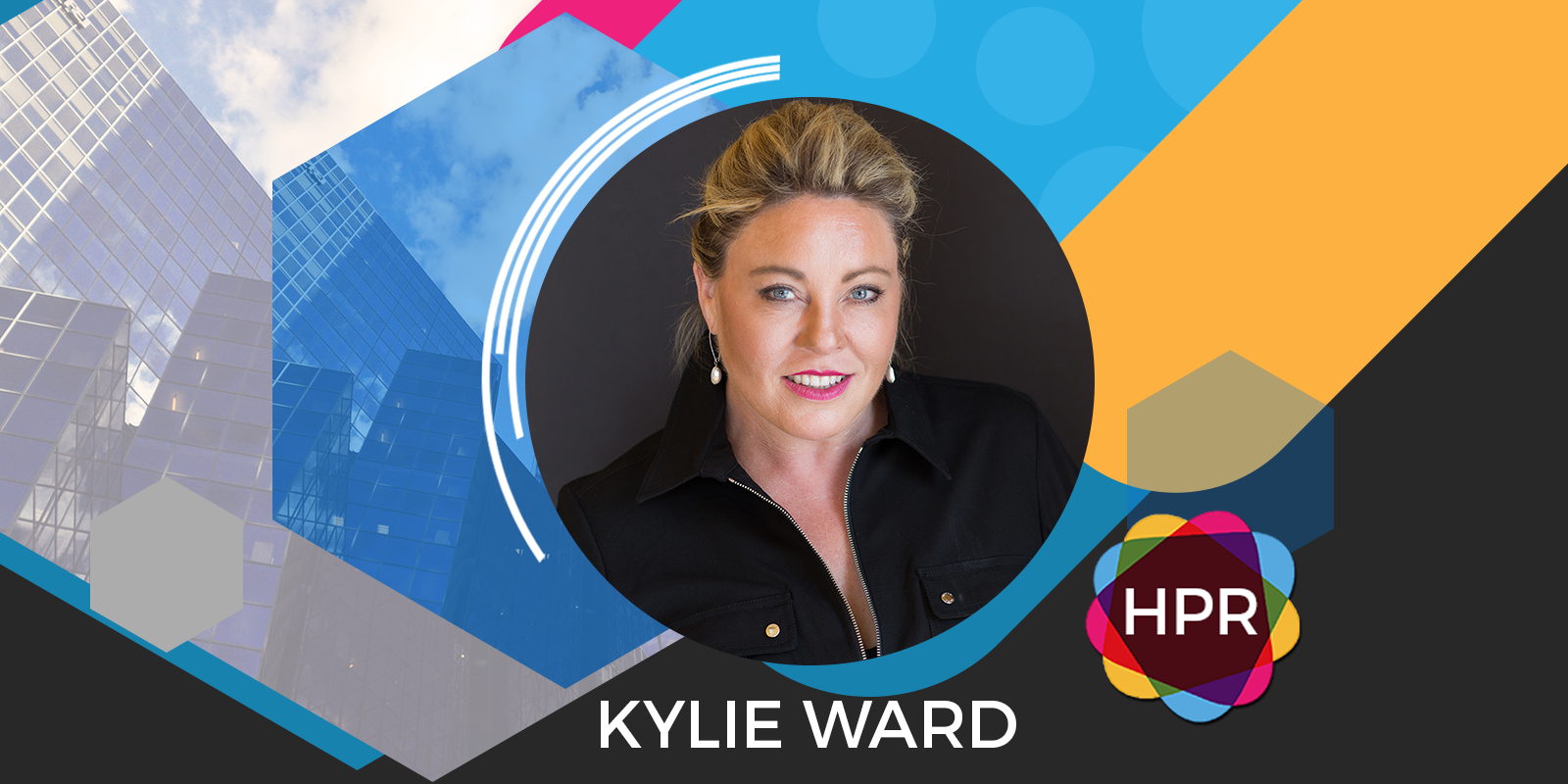
Guest: Kylie Ward

Presenter: Henry Acosta

Guest Bio: Adjunct Professor Kylie Ward has had a successful and celebrated career as a Nursing Leader and Health and Aged Care Executive in Australia for over 20 years. She has held positions of Managing Director, Director of Clinical Operations, Director of Nursing and Midwifery, Director of the Division of Medicine, Associate Director of Women’s and Children’s Health and Executive Director of Nursing and Midwifery in three major health services in NSW and Victoria. She has been a NUM, After Hours Coordinator, Campus Manager, Bed Manager and Patient Flow Manager. Her clinical background is in intensive care and aged care.

Kylie has enjoyed a long history with ACN and the organisations that ACN is founded upon, RCNA and the College of Nursing. After years of membership and involvement in both organisations including RCNA Chapter Chair of Sydney West Kylie was awarded Fellowship of both organisations in 2007. In 2009 Kylie was awarded a Wharton Fellowship from the University of Philadelphia, Pennsylvania. Understanding the history and commitment of these two great organisations to nursing professionalism in Australia Kylie is committed to honouring the past to lead the Australian College of Nursing as a dynamic and influential key professional organisational well into the future.

Segment overview: In today’s Health Supplier Segment, we are joined by returning guest Adjunct Professor Kylie Ward from the Australian College of Nursing here to discuss the topic of Electronic Health Records of Patients and their safety. According to Kylie, a national shared electronic health record means that as people move between health care providers, or even move between states, clinical professionals have a single trusted source of information. This information that could be vital such as a person’s allergies or medications, they can quickly and easily access. She also said that the ACN supports moves towards a national op-out approach to My Health Record and wants to ensure the vast majority of Australians take up this opportunity to improve their health care. Kylie mentioned that security concerns could play a factor in people choosing to wait to participate. She believes that nurses must be involved in the development, implementation and ongoing maintenance of My Health Record.

Read More