Omega 3 Levels: The Importance and Health Benefits [transcript][audio]

gerald-quigley

Guest: Gerald Quigley

Presenter: Tabetha Moreto

Guest Bio: Gerald is a pharmacist and master herbalist based in Melbourne. He is a media health commentator heard each week on many radio stations across Australia. His passion is to empower each person to make sensible health decisions, and to continually maintain and improve their quality of life, especially as they age. Rediscovering the ability to understand wellness, the role of food choices, and aging well, are aspects of vitality fundamental to our future.

Segment Overview: In today’s interview, Gerald elaborates on the significant health benefits of omega 3 and how omega 3 levels are as important as cholesterol to help predict risk of serious diseases including heart disease and inflammatory conditions.

Read More

Special Needs Related to Spasticity [transcript][audio]

Guest: Dr. Atul Patel, MD  

Presenter: Neal Howard

Guest Bio: Dr. Atul Patel is a Physiatrist, also known as a Physical Medicine and Rehabilitation physician at Kansas City Bone & Joint. He became a part of KCBJ in November of 2001. He is board certified in Physical Medicine and Rehabilitation, Spinal Cord Medicine, Neuromuscular Medicine, Brain Injury Medicine, and Electrodiagnostic Medicine. Prior to KCBJ, Dr Patel was an associate professor in the Department of Rehab Medicine at the University of Kansas, School of Medicine. Dr Patel’s clinical areas of interest include musculoskeletal medicine, neuropathic pain, spasticity, movement disorders such as Parkinson’s disease and dystonias, stroke rehabilitation, multiple sclerosis, nerve and muscle diseases, geriatrics, electrodiagnostic medicine and general rehabilitation medicine. He earned his Undergraduate Degree in Chemical Engineering from the University of Houston; Medical Degree from Baylor College of Medicine in Houston; Master’s Degree in Rehabilitation Medicine (University of Washington); and another Master’s Degree in Health Services Administration (University of Kansas). During his downtime, he enjoys tennis, traveling and spending time with my family.

Segment Overview: Dr. Atul Patel, MD, a Physiatrist or a Physical Medicine & Rehabilitation Specialist with the Kansas City Bone & Joint Clinic, discusses the unmet need of spasticity patients and their caregivers.

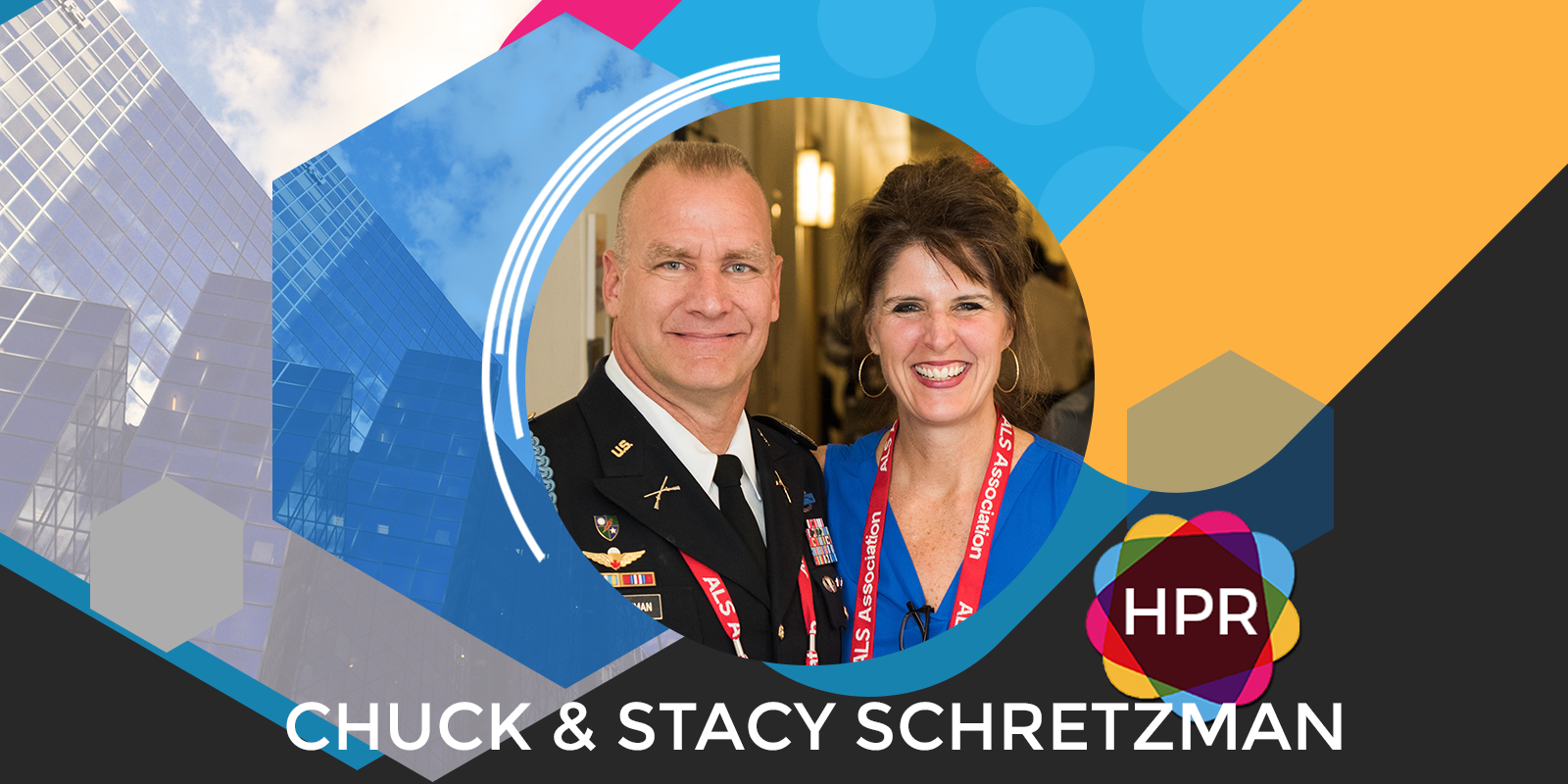
Living with ALS [transcript][audio]

Segment Overview: Chuck Schretzman, former Army Veteran and West Point football player, and his wife Stacy talk about living with ALS/ Lou Gehrigs disease and advocating for greater ALS awareness and further medical research.

Guest: Chuck and Stacy Schretzman

Presenter: Neal Howard

Guest Bio: Chuck Schretzman, a 26-year Army veteran and former West Point football player, was diagnosed with ALS at the age of 49 — just months after taking a civilian job following two decades in the army and four combat deployments. His wife Stacy says the disease takes something away from him every day – but she strives to keep him going forward and together they advocate for greater ALS awareness and further medical research. They are featured in a new documentary series “Behind ALS” that is sponsored by Cytokinetics and chronicles the impact this grave disease has on people’s lives while raising awareness.

Medical Advances on ALS (Lou Gehrig’s Disease) [transcript][audio]

Guest: Dr. Robert G. Miller, MD

Presenter: Neal Howard

Guest Bio: Dr. Robert G. Miller is a neurologist and Director of the Forbes Norris MDA/ALS Research Center at California Pacific Medical Center (CPMC) in San Francisco. It is the largest ALS clinical research center in the United States and one of six national Muscular Dystrophy Association ALS Centers. Dr. Miller is also a Clinical Professor of Neurology and Neurological Sciences at both the University of California San Francisco and Stanford University. Dr. Miller investigates methods to reduce neuroinflammation and slow the progression of ALS. He has been involved in clinical trials, as well as investigator initiated studies with colleagues at CPMC evaluating various pharmacotherapies for ALS. Dr. Miller is a member of the Neurodiagnostic Medical Advisory Board at One Call Care Management, Inc. In 1989, he served on the American Board of Electrodiagnostic Medicine. In 1997 he was honored by The American Association of Electrodiagnostic Medicine (AAEM) with the Distinguished Physician Award. Dr. Miller received his medical degree from Weill Medical College of Cornell University, and completed his residencies at the University of California San Francisco Medical Center and the University of California San Diego Medical Center.

Segment Overview: Dr. Robert G. Miller, MD, Director, Forbes Norris MDA/ALS Research Center, California Pacific Medical Center, San Francisco, talks about the basics of ALS/Lou Gehrig’s disease, the latest research and medical advances.

Fearless Man Live [transcript][audio]

Segment Overview: In this segment, FEARLESS founder, Brian Begin, discusses the company’s ‘The FEARLESS Man Live’ weekend seminars and how people can live Fearlessly.

Guest: Brian Begin

Presenter: Neal Howard

Guest Bio: FEARLESS founder Brian Begin specializes in making dreams come true: the dating and success coach, relationship expert, author and motivational speaker is in the business of helping students build a firm foundation of confidence and get underneath the layers of social conditioning and (often unconscious) fears they’ve picked up throughout life to find their most authentic, FEARLESS selves. Trained at the Hypnosis Motivation Institute with coursework under Dr. Karl Wolfe and David Neagle, Begin’s career took shape when he discovered he had the innate ability to teach others how to live a more successful life by simply changing perspective and behavior.

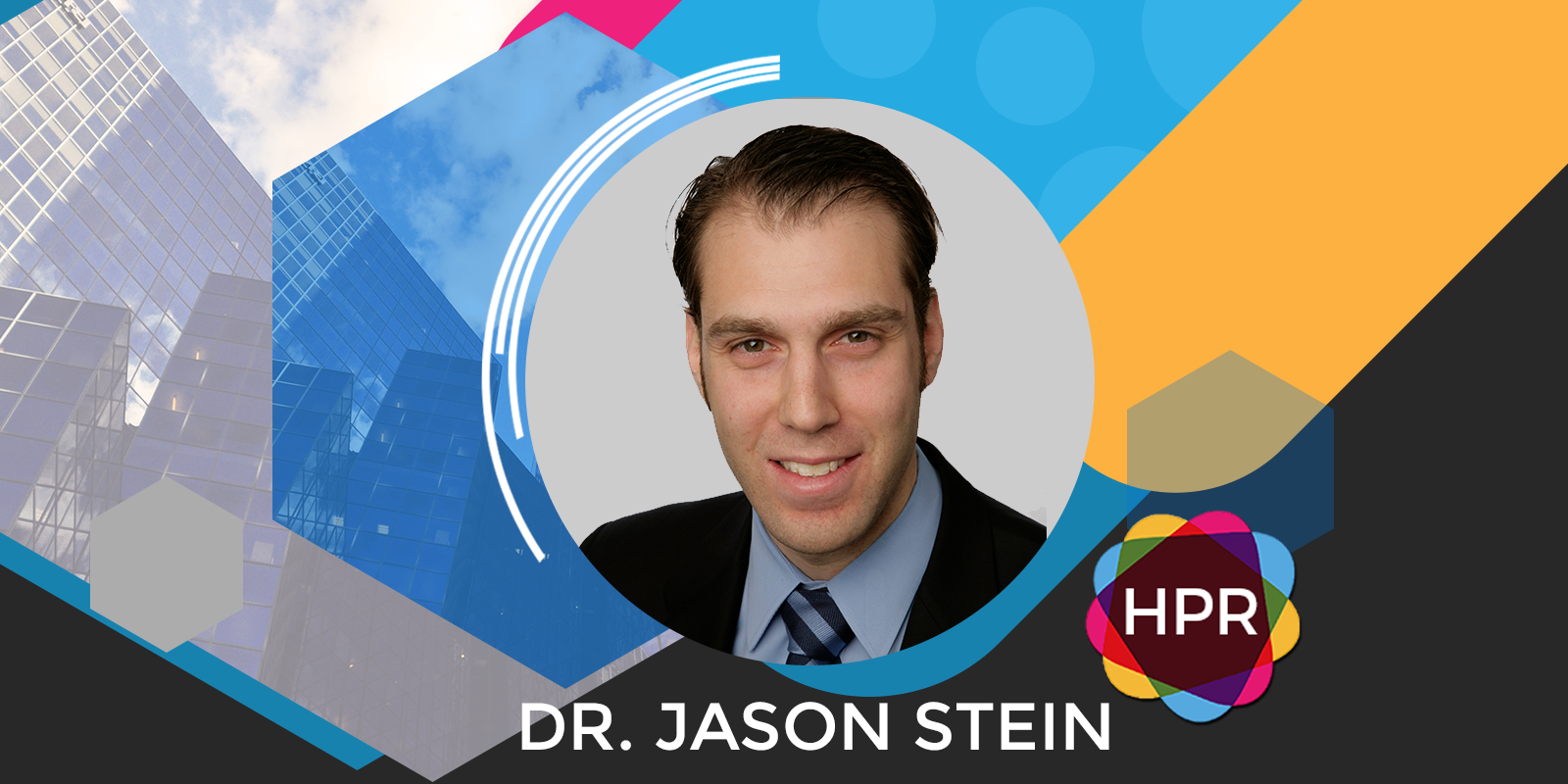
Advanced Shoulder and Elbow Surgical Techniques [transcript][audio]

Guest: Dr. Jason Stein, MD

Presenter: Neal Howard

Guest Bio: Jason Stein, MD, is an attending orthopaedic surgeon at the MedStar Union Memorial Hospital. He specializes in disorders of the shoulder and elbow.

Dr. Stein is experienced in advanced surgical techniques, including arthroscopic rotator cuff repair, arthroscopic instability (dislocation) repairs and elbow arthroscopy. In addition, he performs minimally invasive total shoulder and reverse total shoulder replacements. His research, on topics such as advances in the treatment of distal humeral fractures and shoulder resurfacing arthroplasty, has been published in journals, including the American Journal of Orthopedics and Instructional Course Lectures. Dr. Stein serves as a peer reviewer for the Journal of Shoulder and Elbow Surgery and the Journal of Bone and Joint Surgery (U.S. edition). He is certified by the American Board of Orthopaedic Surgery. His medical degree is from the Baylor College of Medicine, Houston. He completed a residency in shock-trauma orthopaedics at the University of Maryland. He then completed a fellowship in shoulder and elbow surgery at Washington University School of Medicine/Barnes-Jewish Hospital in St. Louis, MO.

Segment Overview: In this segment, Dr. Stein discusses advanced surgical techniques, including arthroscopic rotator cuff repair, arthroscopic instability (dislocation) repairs, elbow arthroscopy,  and total shoulder and reverse total shoulder replacements.

Sports Medicine Cardiology [transcript][audio]

Guest: Ankit B. Shah, MD, MPH, FACC

Presenter: Neal Howard

Guest Bio: Ankit B. Shah, MD, MPH, FACC is Director of the Sports & Performance Cardiology Program for MedStar Heart and Vascular Institute at Union Memorial Hospital and attending cardiologist at MedStar Union Memorial. Dr. Shah specializes in the clinical care and exercise testing of active individuals. He has authored textbook chapters on sports cardiology and has presented at the annual sports cardiology conference sponsored by the American College of Cardiology. His research interests include athletic heart, cardiac screening and Hypertrophic cardiomyopathy. He completed his sports cardiology fellowship in the Cardiovascular Performance Program at Massachusetts General Hospital, Harvard Medical School in Boston, Massachusetts. He completed his training in cardiovascular disease at Lenox Hill Hospital in New York, New York and internship and residency at Cedars-Sinai Medical Center in Los Angeles, California. He is a graduate of Tufts University School of Medicine in Boston, Massachusetts where he also completed a Master in Public Health. He is a Fellow of the American College of Cardiology and board certified in internal medicine, cardiology, echocardiography, cardiac CT and nuclear cardiology.  

Segment Overview: In this segment, Dr. Ankit Shah discusses his unique training as a Sports Medicine Cardiologist.

Elbow Replacement and Related Issues [transcript][audio]

Segment Overview: In this segment, Dr. Murthi talks about the challenges of Elbow Replacement and related issues.

Guest: Dr. Anand Murthi, MD

Presenter: Neal Howard

Guest Bio: Dr. Murthi is a board certified orthopaedic surgeon. He is a specialist, fellowship trained in shoulder and elbow surgery. Dr. Murthi’s special interests include arthroscopic shoulder and elbow surgery; minimally invasive shoulder replacement, including reverse shoulder replacement; and elbow reconstruction. Chosen for Castle Connolly America’s Top Doctors 2015.


Transcript

Neal Howard: Welcome to Health Professional Radio. I’m your host Neal Howard. Thank you so much for joining us today. Our guest is Dr. Anand Murthi. Here with us as a shoulder and elbow surgery expert specializing in throwing injuries, shoulder surgery as I said and elbow surgery. Welcome to the program Dr. Murthi.

Dr. Anand Murthi: Thank you very much for having me.

N: You’re there at MedStar Union Memorial Hospital. Where exactly is that located?

M: That’s North to the City, right by Johns Hopkins under that large footprint right there.

N: You’re an orthopedic surgeon and you specialize not only in elbow surgery but shoulder replacement, reverse shoulder replacement and things of that nature, but we’re here today to focus on elbow surgery. What is it about the elbow that makes it a little bit more problematic sometimes than some of the other surgeries that you may be involved in?

M: The elbow joint is very complex it has a lot of bony to that can occur it’s a very hinge type of joint and when the injuries occur such as in a throwing athlete or a pitcher and they can disrupt this ligament it’s very hard for it to heal on its own due to the repetitive nature of throwing. Then often then we have to reconstruct that ligand, there are multiple nerves that cross the elbow joints that have to be protected and taken care of. It’s a very complex joint that we work on.

N: You mentioned tearing ligaments due to repetitive pitching sports when the bone is actually broken is that even more problematic or are you know the tearing of ligaments and the breaking of a bone pretty much equal as far as the difficulty in making those repairs?

M: Interesting enough, when a patient fractures their elbow it’s often easier to repair that so it’s healed very easily especially in young patients. There is a good vascular supply and there’s own seriously. When ligaments tear it is your chronic issue, it’s very difficult to get those patients back with just rehabilitation or some sort of a treatment of ligament healing when they tear much more difficult than bones.

N: Are there several types of breaks in the elbow itself I mean the elbow is very small. How many different types of breaks can you actually get there?

M: It actually a multiple fracture the end of your arm bone, that’s called a distal humerus fracture. A fracture the radial head that’s the circular bone that allows your arm to rotate. There’s also what’s called the ulna or the electrode on which is the back of the elbow or the forearm and that often breaks attached to your triceps and then. When people fall they easy commonly zero micro knocks.

N: Are these isolated breaks or can they be a combination based on the trauma that the elbow endures?

M: It’s definitely related to the trauma. Simple fall they usually break one bone but when they have a high energy or a traumatic injury or motor vehicle accident or fall from height they can often break multiple bones and dislocate the elbow too all at one.

N: Your surgery always a requirement when it comes to a bone fracture or even a severe ligament tear.

M: Most commonly if the fractures are well aligned and they haven’t displaced which means they’ve moved out of alignment and those patients are usually treated with a short period of immobilization and then therapy they you should do very well same with ligaments. It really depends on how much they’ve moved or displaced or away from their normal alignment that depends on whether they need surgery or not.

N: Are these non-surgical options something that can be performed? Pretty readily by a non specialist or is it usually advised to seek out a specialist when you sustained such an injury?

M: My part is to always seek out a specialist with the elbow. It’s a very complex surgery. Before you can treat it you have to have a very diagnosis and maybe that’s probably even more important to understand that the diagnosis of some of these even common injuries can usually be done very well by a specialist to the specializes at the elbow or the shoulder or whatever joint seeking care for.

N: Do you ever find yourself working with someone who sustained an injury, a small fracture and it healed on its own without coming to see a specialist? But now they’re having problems 10-15 years later and those problems are persisting to the point where they actually have to have surgery to repair or relieve the discomfort.

M: Sure. I mean that use to term that a post-traumatic arthritis or post-traumatic malunion which means they had it a fracture or an injury which they treated racing or rehab. It’s wasn’t align properly or functional in the way. When they go on over five or ten years, they’ll develop disease on the elbow or contractures or actually arthritic joint at which point the surgery then is needed a little bit more complex whether it’s an arthroscopy to clean out the elbow or replacement of the elbow or realignment of the elbow. Those become much more complex when you’re taking care of them later on.

N: In the case of complex trauma, would you treat the shoulder or the elbow first based on how you want your patient to regain mobility?

M: The patient comes in a multi-trauma in the shoulder and how we using fix those at the same time especially in the upper extremity. Because the key is to start mobilizing them or to start moving that extremity. When anyone has a fractured both the shoulder and the elbow those joints become very stiff. If not treated and then move really quickly. If you repair them or don’t treat them very difficult to get ahead of the game and get their motion back treat both that same time.

N: Is this something that you went into deliberately or was something that something happened in the course of your medical training that steered you toward this area of expertise?

M: I was trained by my mentor, my chairman was a world-renowned shoulder surgeon and shoulder renowned specialists. He really mentored me and guided me down this pathway and then I did that fellowship and shoulder and elbow surgery and another world renowned surgeon up in New York and I enjoyed the surgery. I enjoyed this type of patients at the pathology, those not diagnosed these injuries. If you will you know I get to take care of patients from Pediatrics or lift grandmothers and grandfathers and it’s a great experience.

N: We’d like to learn some more about MedStar. Where can we get some more information?

M: MedStar, you can go online that medstar.org, the Union Memorial Hospital as well. Those websites are available and there are some really good information on all our specialties and in all the physicians and physician extenders that work there and there’s a lot of information online as well.

N: Dr. Murthi, thank you so much for taking the time and joining us here today.

M: Great. Thank you.

N: You’ve been listening to Health Professional Radio. I’m your host Neal Howard. Transcripts and audio of the program are available at hpr.fm also at healthprofessionalradio.com.au. You can subscribe to this podcast on iTunes, listen in and download at SoundCloud and sure and visit our affiliates page at hpr.fm.

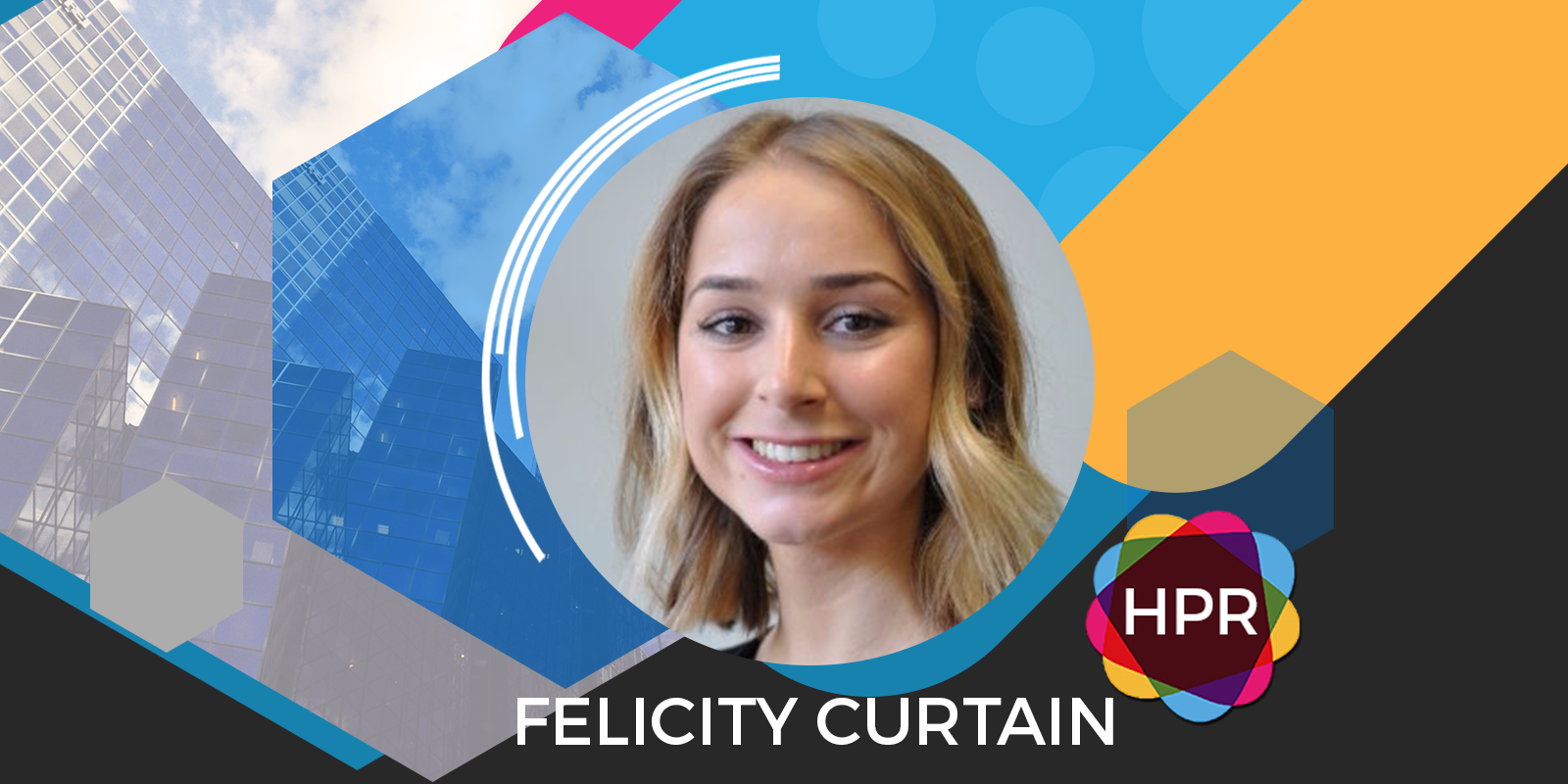
Grains Are Back On the Menu for Australians [transcript][audio]

Guest: Felicity Curtain

Presenter: Tabetha Moreto

Guest Bio: Felicity Curtain is an Accredited Practising Dietitian, and works as Nutrition Manager at the Grains and Legumes Nutrition Council. Through her role, Felicity manages various research projects focused on understanding the nutritional benefits of grain and legume foods, and communicates these with manufacturers, retailers, the media, and consumers. Felicity is passionate about translating complex nutrition science in an easily digestible manner, to empower Australians to improve their health through good nutrition.

Segment Overview: In today’s interview, Felicity discusses about how according to new research shows that fewer Australian are limiting grain foods and also increasing their intake of legumes.

Read More

Probiotics For Mental Health: How Gut Health and Mental Health Are Connected [transcript][audio]

Teresa-Mitchell-Paterson

Guest: Teresa Mitchell-Paterson

Presenter: Tabetha Moreto

Guest Bio: Teresa Mitchell-Paterson is the nutritional advisor for Bowel Cancer Australia. She is an educator of final year clinical studies for Bachelor of Health students (Naturopathy and Nutritional Medicine). Ms. Mitchell-Paterson is qualified Nutritionist who also holds a Masters of Health Science in Human Nutrition; is herself a bowel cancer survivor and works as a member of Bowel Cancer Australia’s patient services team.

Segment Overview: In today’s interview, Teresa discusses about how probiotics appear to show a beneficial effect on general signs of stress, mild anxiety and low mood. She also explains the connection between our gut health and mental health.

Read More