The Health News – 16 May 2016

Key Takeaways
- Key Point: Overview: • The Federal Government has announced it will fund a $54 million subsidy for glucose testing technology to help young people with type 1 diabetes if re-elected.
- Key Point: The funding would subsidise the cost of Continuous Glucose Monitoring (CGM) devices for up to 4,000 children and young people who have type 1 diabetes.
- Key Point: • In the most serious complaint, a clinician at the Repatriation General Hospital (Repat) in Adelaide cited a rapidly deteriorating patient in an operating theatre urgently …
- Key Point: The emergency blood took five minutes to order and the staff member said the delay compromised patient care.
- Key Point: • The Returned and Services League (RSL) has won a bid to take over the Daw Park Repatriation General Hospital in Adelaide when it closes next year.
Overview:
• The Federal Government has announced it will fund a $54 million subsidy for glucose testing technology to help young people with type 1 diabetes if re-elected. The funding would subsidise the cost of Continuous Glucose Monitoring (CGM) devices for up to 4,000 children and young people who have type 1 diabetes.
• In the most serious complaint, a clinician at the Repatriation General Hospital (Repat) in Adelaide cited a rapidly deteriorating patient in an operating theatre urgently needing blood. The emergency blood took five minutes to order and the staff member said the delay compromised patient care.
• The Returned and Services League (RSL) has won a bid to take over the Daw Park Repatriation General Hospital in Adelaide when it closes next year. The RSL said it planned to turn the site into a residential aged care facility with privately provided health services, but it would also provide housing for homeless veterans.
Frequently Asked Questions
What is the main topic discussed in this episode of Health Professional Radio?
This episode covers important developments in healthcare, including updates on Diabetes. Health Professional Radio brings you expert insights and analysis on the latest medical news affecting healthcare professionals and patients alike.
How can healthcare professionals benefit from this information?
Healthcare professionals can stay informed about the latest developments in Diabetes and related fields, enabling them to provide better patient care. Staying current with medical news helps clinicians make evidence-based decisions in their practice.
Where can I find more information about Diabetes?
For more detailed information, listen to the full episode on Health Professional Radio and visit hpr.fm for additional resources. You can also subscribe to our podcast for regular updates on healthcare news and expert interviews.
News on Health Professional Radio. Today is the 16th of May 2016. Read by Rebecca Foster. Health News
The Federal Government has announced it will fund a $54 million subsidy for glucose testing technology to help young people with type 1 diabetes if re-elected.
The funding would subsidise the cost of Continuous Glucose Monitoring (CGM) devices for up to 4,000 children and young people who have type 1 diabetes.
CGM devices track a person’s glucose levels throughout the day and night, and sound an alarm if they are dangerously high or low.
Federal Health Minister Sussan Ley said the devices help children who cannot feel their blood sugar levels falling and offer constant feedback, unlike a traditional finger-prick test.
Hypo-unawareness is a term describing those people with diabetes who may not recognise the symptoms of low blood sugar, including feeling weak or tingling in the mouth or fingers, or who may have different symptoms than those usually experienced.
Ms Ley said the devices mean children and parents do not have to worry about waking up in the middle of the night for traditional finger-prick tests.
Regional families have recently been calling for a subsidy on CGM devices to be put in place, saying access to the devices would alleviate their isolation from other medical facilities.
CGM devices can cost up to $5,000 a year, and are not covered by Medicare or private health insurance.
Ms Ley said the funding for a subsidy is part of a wider commitment to a National Diabetes Strategy also planned for development if the Government is re-elected.
Patient care is being put at risk by SA Health’s new electronic system EPAS, according to a doctor’s union, which received a list of complaints from members following a recent rollout.
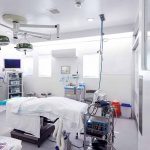
In the most serious complaint, a clinician at the Repatriation General Hospital (Repat) in Adelaide cited a rapidly deteriorating patient in an operating theatre urgently needing blood.
Staff rang the lab and were told to put the blood request through the new $422 million EPAS system.
The emergency blood took five minutes to order and the staff member said the delay compromised patient care.
South Australian Salaried Medical Officers Association spokesperson Dr David Pope said 11 pages of complaints from its members were handed to SA Health in March.
He said the State Government needed to treat the problems with EPAS more seriously.
Mr Snelling said bugs in EPAS were being fixed when identified.
The EPAS rollout has taken longer than expected and is due to be installed at the Queen Elizabeth Hospital next month.
It will be an important test ahead of its introduction at the new Royal Adelaide Hospital (RAH), which is due to open in November.
The Returned and Services League (RSL) has won a bid to take over the Daw Park Repatriation General Hospital in Adelaide when it closes next year.
The controversial closure is part of the South Australian Government’s Transforming Health plan to reform the state’s hospital system.
The building was established around the time of World War II and is recognised for its work with veterans, including those who served recently in the Middle East.
The RSL said it planned to turn the site into a residential aged care facility with privately provided health services, but it would also provide housing for homeless veterans.
State president Tim Hanna said the RSL had been providing care to veterans for over 100 years and the site would provide “a great range of services for veterans”.
The development of a remembrance walk with 31 plagues [sic] plaques detailing Australia’s military history has also been proposed.
The site’s closure prompted extensive protests from Adelaide’s veteran community, which staged a 161-day live-in protest on the steps of Parliament House.
Health Minister Jack Snelling said the RSL’s successful bid would provide of lot of reassurances to “the veterans community in particular”.
The RSL will take over the site in 2017.
The Government said last year that Repat staff would be redeployed to other sites when the hospital closes and did not rule out the chance of redundancies.

Medical Disclaimer
The information provided on this website is for general informational purposes only and is not intended as medical advice. Always consult with a qualified healthcare professional for medical advice, diagnosis, or treatment. Never disregard professional medical advice or delay in seeking it because of something you have read on this website.