
Ebola Outbreak in DR Congo: Over 170 Dead as Rare Bundibugyo Strain Spreads in Ituri Province
“
Urgent Public Health Alert: What You Need to Know About the 2026 Ebola Outbreak
\n\n
The Democratic Republic of Congo is facing a severe Ebola outbreak driven by the rare Bundibugyo species of the virus, with over 170 confirmed deaths and hundreds more infected since the outbreak was officially declared just over a month ago. Health authorities are racing to contain the spread in Ituri province, a region that has experienced multiple Ebola outbreaks in the past decade.
\n\n
According to the World Health Organization, the Bundibugyo strain has a case fatality rate of approximately 20 percent, making it less deadly than the Zaire strain but still a significant public health threat. Compounding the challenge, the outbreak appears to have been spreading undetected for months before it was officially identified.
\n\n
The Current Situation in Ituri Province
\n\n
The epicenter of the outbreak is centered around the towns of Mongbwalu and Rwampara in northeastern DR Congo. More than 140 confirmed deaths have been recorded in Mongbwalu alone, with additional fatalities in surrounding communities. The actual number may be higher, as surveillance and testing continue to expand.
\n\n
Key facts about the current outbreak:
\n
- \n
- Confirmed deaths: Over 170 across the affected region
- Virus strain: Bundibugyo ebolavirus (rare species)
- Location: Ituri province, northeastern DR Congo
- Fatality rate: Approximately 1 in 5 infected (20%)
- Onset: Possibly circulating since early February 2026
- Official declaration: Mid-May 2026
- Health worker deaths: At least 5 medical professionals
\n
\n
\n
\n
\n
\n
\n
\n\n
Why This Outbreak Is Different
\n\n
The Bundibugyo species is one of the least common Ebola strains. First identified during an outbreak in Uganda in 2007, it has only appeared in a handful of outbreaks since. Most diagnostic protocols and testing initially look for the more common Zaire strain, meaning early cases of Bundibugyo can be easily missed \u2014 exactly what happened here.
\n\n
Initial tests on suspected cases were returning negative results because medical investigators were screening for the wrong strain. This delayed the response by weeks, allowing the virus to spread further through communities before containment measures could be implemented effectively.
\n\n
Community Resistance and Misinformation
\n\n
A significant barrier to containing this outbreak has been widespread misinformation and community distrust of healthcare workers. Local myths, including the so-called \”coffin curse,\” have led many residents to believe that Ebola is a supernatural phenomenon rather than a viral disease. Some community members have blamed the outbreak on the burning of a broken coffin during a burial in early February.
\n\n
This distrust has had deadly consequences. On May 21, a tent set up to treat Ebola patients at Mongbwalu hospital was set on fire. A similar attack occurred at a treatment center in Rwampara two days later. These attacks echo patterns seen during the 2018-2020 Ebola outbreak in neighboring North Kivu province, where treatment centers were repeatedly targeted.
\n\n
\”The people here had been misled to believe that Ebola ended during previous outbreaks after they burned down the treatment centres,\” explained Dr. Richard Lukodu, medical director of Mongbwalu hospital.
\n\n
Glimmers of Hope: Patient Recoveries
\n\n
Despite the grim statistics, there are signs of progress. Patient recoveries are helping rebuild trust between healthcare providers and the community. Fifty-five-year-old pastor Deogratias Kasereka became the first Ebola patient discharged from the Mongbwalu treatment centre a week ago, followed by 49-year-old farmer Daniel Kitambara.
\n\n
Kitambara’s discharge was met with singing and dancing from healthcare workers. \”That disease is terrible. I was feeling very ill. But God is great, I am well now,\” he told reporters as he left the clinic after three weeks of treatment.
\n\n
Dr. Lukodu noted a dramatic shift in community attitudes since the first recoveries. \”We have seen a huge difference in the community since the first patient recovered and returned home. More people are coming here now seeking treatment.\”
\n\n
Healthcare Workers on the Front Line
\n\n
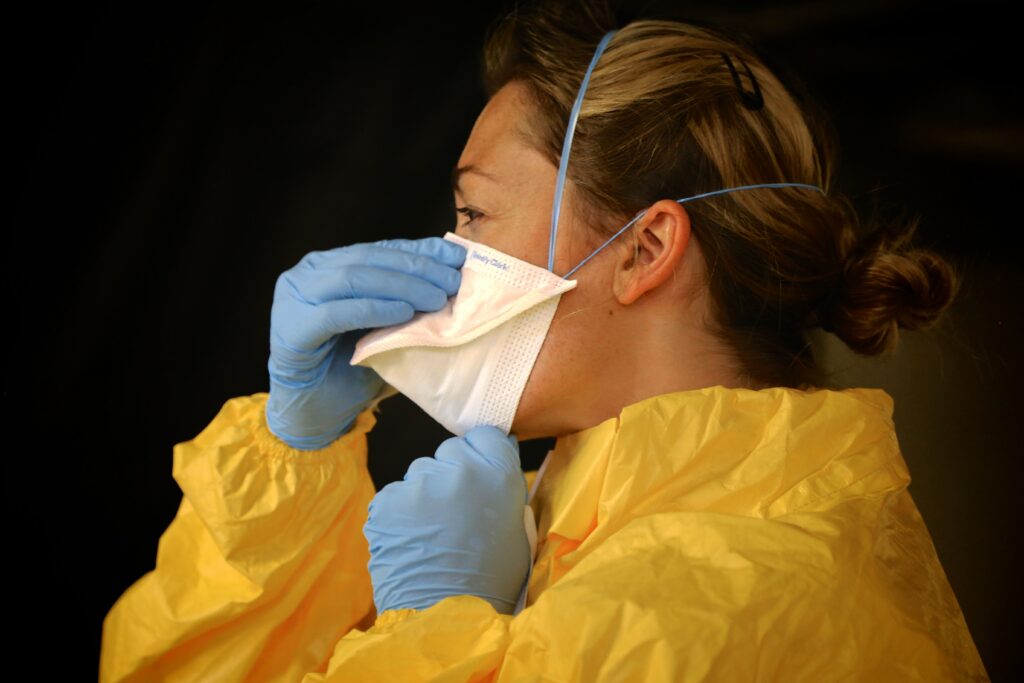
Medics remain among the most vulnerable during any Ebola outbreak. Five health workers have died from the virus in this outbreak, and several more are currently being treated. However, improved infection prevention and control practices have been put in place since the official outbreak declaration, reducing the ongoing risk to medical staff.
\n\n
The recent installation of a laboratory at Mongbwalu hospital has been a game-changer. Results that previously took over a week to arrive from the nearest testing facility in Bunia \u2014 a two-and-a-half-hour drive away \u2014 can now be returned within a single day.
\n\n
Contact Tracing Challenges
\n\n
Public health officials warn that critical gaps remain in contact tracing. Every person who has had contact with an infected individual needs to be identified, tested, and monitored. Health authorities acknowledge that many contacts are still being missed, raising the risk of continued undetected transmission.
\n\n
Until comprehensive contact tracing is achieved, any optimism about controlling the outbreak may be premature. The WHO has called for increased international support for surveillance, laboratory capacity, and community engagement efforts.
\n\n
Frequently Asked Questions About the Ebola Outbreak
\n\n
What is the Bundibugyo strain of Ebola?
\n
Bundibugyo ebolavirus is one of six known species of Ebolavirus. First identified in Uganda in 2007, it is less common than the Zaire strain but still causes severe illness with a fatality rate of approximately 20-40% depending on outbreak conditions and healthcare access.
\n\n
How does Ebola spread?
\n
Ebola spreads through direct contact with bodily fluids such as blood, vomit, saliva, urine, and feces of an infected person. It can also spread through contact with contaminated surfaces or materials. The virus does not spread through air, water, or casual contact.
\n\n
What are the symptoms?
\n
Symptoms include fever, severe headache, muscle pain, fatigue, vomiting, diarrhea, and in later stages, unexplained bleeding or bruising. Symptoms typically appear 2 to 21 days after exposure.
\n\n
Is there a vaccine for Bundibugyo Ebola?
\n
While there are effective vaccines for the Zaire strain (rVSV-ZEBOV), there is currently no specifically approved vaccine for the Bundibugyo species. Research is ongoing, and the WHO is coordinating efforts to evaluate potential vaccine candidates.
\n\n
Is it safe to travel to DR Congo?
\n
Travel advisories are in place for affected regions. The WHO recommends against any travel restrictions to DR Congo as a whole, but advises travelers to affected provinces to take enhanced precautions. Check with your national health authority for current travel guidance.
\n\n
What treatments are available?
\n
Supportive care \u2014 including fluid replacement, oxygen therapy, and treatment of specific symptoms \u2014 significantly improves survival rates. Monoclonal antibody treatments used for Zaire Ebola are being evaluated for effectiveness against Bundibugyo.
\n\n
Could this outbreak spread globally?
\n
The WHO assesses the regional risk as high but the global risk as low. DR Congo has significant experience managing Ebola outbreaks, and international response teams are already deployed. However, gaps in contact tracing remain a concern.
\n\n
What is Being Done
\n\n
International health organizations, including the WHO, M\u00e9decins Sans Fronti\u00e8res (MSF), and the Africa CDC, have deployed response teams to Ituri province. Efforts include:
\n
- \n
- Expanding diagnostic laboratory capacity
- Training healthcare workers on infection prevention
- Community engagement and public health education campaigns
- Strengthening surveillance and contact tracing
- Supporting safe burial practices
- Evaluating experimental treatments and vaccines
\n
\n
\n
\n
\n
\n
\n\n
Community leaders are being engaged to help combat misinformation and encourage early treatment-seeking behavior. The mayors of affected towns have been working with health authorities to explain symptoms and refer suspected cases to treatment centers.
\n\n
Conclusion
\n\n
The Ebola outbreak in DR Congo is a serious public health emergency that requires sustained international attention and resources. While the rare Bundibugyo strain presents unique challenges, the proven strategies of surveillance, contact tracing, community engagement, and quality supportive care remain the most effective tools for containment. Every recovery brings hope and builds the trust needed to stop this outbreak.
\n\n
Health Professional Radio will continue to monitor this developing story and provide updates as new information becomes available.
\n”

Medical Disclaimer
The information provided on this website is for general informational purposes only and is not intended as medical advice. Always consult with a qualified healthcare professional for medical advice, diagnosis, or treatment. Never disregard professional medical advice or delay in seeking it because of something you have read on this website.