Historic Cyclospora Outbreak Sweeps Across 41 US States — Largest Recorded in History

Historic Cyclospora Outbreak Sweeps Across 41 US States — Here’s What You Need to Know
The United States is currently experiencing the largest recorded outbreak of cyclosporiasis in its history, with thousands of confirmed cases now reported across 41 states. Health officials are racing to identify the source as the illness continues to disrupt lives, particularly in Michigan and Ohio where infection rates are highest.
Cyclosporiasis, caused by the microscopic parasite Cyclospora cayetanensis, leads to severe gastrointestinal distress. For those affected, the experience has been described as debilitating — with patients reporting up to 20 bathroom visits per day, intense abdominal cramping, and what medical professionals describe as “explosive diarrhoea.”
How Bad Is the Current Outbreak?
According to the latest data from the Centers for Disease Control and Prevention (CDC), the outbreak has already surpassed all previous records. The CDC has reported over 4,173 confirmed laboratory-positive cases, with an additional 7,400 suspected cases still under investigation. These figures make this outbreak more than ten times larger than any previous cyclosporiasis outbreak recorded in the United States.
Michigan has been the hardest-hit state, with over 7,000 documented infections. Within Michigan, Monroe County — a rural community of roughly 154,000 residents on the state’s eastern boundary — has recorded 286 confirmed cases, one of the highest concentrations in the nation.
What Is Cyclospora and How Does It Spread?
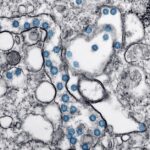
Cyclospora is a single-celled parasite that infects the small intestine. Unlike many foodborne pathogens, Cyclospora requires time outside the human host to become infectious — it does not spread directly from person to person. Instead, infection occurs when people consume food or water contaminated with mature Cyclospora oocysts (the parasite’s egg-like form).
The most common transmission route is through contaminated fresh produce, particularly imported fruits and vegetables that have been washed or sprayed with contaminated water. In past outbreaks, raspberries, basil, snow peas, and various salad greens have all been implicated as vehicles for transmission.
Symptoms: What Patients Are Reporting
Infection typically begins with watery diarrhoea, which can be severe and frequent. Other common symptoms include:
- Frequent, explosive diarrhoea (15–20 episodes per day)
- Severe abdominal cramping and bloating
- Nausea and vomiting
- Loss of appetite and significant weight loss
- Low-grade fever
- Fatigue and general weakness
- Gas and stomach pain that can persist for weeks
One Monroe County resident, Brian Clare, a 52-year-old grain and beef farmer, described his three-week ordeal: “This is the most painful thing I’ve ever been through in my life. When you think you gotta go, you got less than two minutes. It’s going no matter what.”
Symptoms can take anywhere from 2 to 14 days to appear after ingesting the parasite, which makes tracing the source exceptionally difficult for investigators. Without treatment, the illness can last from several weeks to more than a month. Relapses — where symptoms return after a period of improvement — are also common.
The Investigative Challenge: A Needle in a Haystack
Identifying the source of a Cyclospora outbreak presents unique challenges for food safety investigators. The parasite is notoriously difficult to detect in laboratory settings. Dr Francisco Diez-Gonzalez, director of the Center for Food Safety at the University of Georgia, explained that “finding a few cysts of Cyclospora in a lettuce sample is literally like looking for a needle in a haystack.”
The Food and Drug Administration (FDA) initially announced a breakthrough on Saturday when an iceberg lettuce sample from Taylor Farms — a major US food supplier — tested positive for Cyclospora. However, the agency was forced to retract that finding less than 24 hours later after confirmatory testing revealed a false positive.
Taylor Farms had already voluntarily recalled all of its iceberg lettuce sourced from central Mexico “out of an abundance of caution.” Major retailers including Walmart, Jack in the Box, and Taco Bell have also pulled potentially contaminated products from shelves.
Health Secretary Robert F Kennedy Jr stated on Tuesday that the outbreak was “under control” — a claim that drew criticism given that the CDC simultaneously reported its highest case tally yet in the same week.
Treatment and Prevention
Cyclosporiasis is treatable with a specific antibiotic combination — typically trimethoprim-sulfamethoxazole (TMP-SMX), also known as co-trimoxazole. For those with sulfa allergies, alternative treatments are available but may be less effective.
Prevention focuses on careful handling and washing of fresh produce. Key recommendations from health authorities include:
- Wash all fruits and vegetables thoroughly under running water before eating, cutting, or cooking
- Scrub firm produce like melons and cucumbers with a clean produce brush
- Cook vegetables where possible, as heat kills the Cyclospora parasite
- Be aware that Cyclospora is resistant to chlorine treatment — standard produce washes may not eliminate it
- Avoid eating raw produce from regions experiencing outbreak conditions
- Practice good hand hygiene after handling raw produce
What This Means for Public Health
The current outbreak has exposed significant gaps in the food safety surveillance system. The fact that the source remains unidentified months after the first detected cases — and that a high-profile test result was retracted due to insufficient verification protocols — has eroded public trust. In Monroe County, residents report widespread anxiety, with many throwing away all fresh produce and avoiding restaurants entirely.
The outbreak also highlights the need for improved laboratory testing methods for Cyclospora, which current technologies struggle to detect reliably. Dr Diez-Gonzalez noted that in most cases, test results are not made public without multiple rounds of confirmatory testing — and the rushed announcement in this case was “questionable” in terms of whether sufficient evidence existed to go public.
Frequently Asked Questions About Cyclosporiasis
Can Cyclospora spread from person to person?
No. Unlike many intestinal pathogens, Cyclospora requires time outside the human body to become infectious. Direct person-to-person transmission does not occur.
How long does Cyclospora live on food?
The Cyclospora parasite’s oocysts can survive on fresh produce for several weeks under cool, moist conditions — which is why imported produce stored and shipped over long distances can be a transmission risk.
Is there a vaccine for Cyclospora?
No, there is currently no vaccine available for cyclosporiasis. Prevention relies entirely on food safety practices and avoiding contaminated produce.
How is Cyclospora diagnosed?
Diagnosis requires microscopic examination of stool samples using special staining techniques. Standard stool tests often miss Cyclospora, so patients must specifically request Cyclospora testing if they have relevant symptoms and exposure history.
Can Cyclospora cause long-term health problems?
For most people with healthy immune systems, cyclosporiasis resolves completely with appropriate antibiotic treatment. However, in immunocompromised individuals (such as those with HIV/AIDS), the infection can be prolonged and severe, requiring extended treatment courses.
Is it safe to eat fresh produce right now?
Yes, with precautions. Thoroughly wash all produce, cook vegetables when possible, and stay informed about FDA recall notices. If you live in or have travelled to an affected area, consider temporarily avoiding raw salad greens and berries from implicated sources.
Stay Informed
The CDC and FDA continue to investigate this unprecedented outbreak. As new information emerges about the source and scope of Cyclospora contamination, public health advisories will be updated. Consumers are advised to monitor official recall announcements and practice vigilant food safety measures to protect themselves and their families.

Medical Disclaimer
The information provided on this website is for general informational purposes only and is not intended as medical advice. Always consult with a qualified healthcare professional for medical advice, diagnosis, or treatment. Never disregard professional medical advice or delay in seeking it because of something you have read on this website.